
What is transarterial chemoembolization?
Chemoembolization is used to treat tumors. It puts a large dose of chemo therapy (chemo) drugs right into the tumor. This puts more of the drugs right on the cancer cells and lessens their effect on other tissues.
In transarterial chemoembolization (TACE), the small blood vessels that supply blood and nutrients to the tumor are also blocked (embolized). Blocking the blood supply slows tumor growth.
When is TACE used?
TACE is used most often to treat liver cancer. It can also be used to treat cancer that started in another area of the body but has spread to the liver. This spreading of cancer is called metasta
How effective is it?
TACE usually makes liver tumors smaller. Sometimes it also reduces metastasis. The goal of this treatment is to keep the tumors under control for months and sometimes years.
A group of experts on liver tumors has determined that TACE is the best treatment for you right now.
This treatment will not cure your cancer by itself. You may also need surgery, radiation therapy, chemotherapy, or radiofrequency ablation (using a heat probe to destroy the rest of the tumor).
How does TACE work on liver tumors?
The liver is unique because it gets blood in 2 ways: from a large portal vein and from the hepatic artery.
During transjugular liver biopsy:
Healthy liver tissue:
Healthy liver tissue:
This means that if a chemotherapy drug is injected into the hepatic artery, most of the drug ends up in the tumor. Very little of the drug reaches healthy liver tissue.
How is it done?
TACE is done by an interventional radiologist (a doctor who specializes in procedures that are guided by X-ray images).
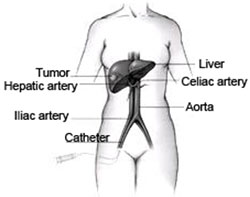
In hepatic artery chemoembolization, a catheter is threaded into an artery in the liver.
What can I expect?
You will meet with your doctors to talk about your treatment schedule. This is the most common treatment schedule:
Week 1: Chemoembolization Round #1
Week 3 or 4
Week 4 or 5: Chemoembolization Round #2 (if needed) or Radiology Studies
Week 8 or 9: Chemoembolization Round #3 (if needed) or Radiology Studies
What chemotherapy drugs are used?
Many different chemotherapy drugs may be used in your treatment. Most people receive only doxorubicin (Adriamycin).
What are the side effects?
We deliver the chemotherapy drugs in a way that they mostly stay in the liver. This means that your system will absorb the chemotherapy drugs very slowly.
This lessens, but does not get rid of, the short-term side effects that people often have from chemotherapy. The most common side effects are nausea and fatigue. Nausea is more likely when a mixture of 3 drugs is used.
Very rarely, a person receiving TACE will lose some or most of their hair.
Are there any risks?
All medical procedures involve some risk. But, the potential benefits of TACE far outweigh the risks.
In large doses, doxorubicin can damage the heart. It is recommended that a person receive no more than about 500 mg of doxorubicin over their lifetime. Each round of TACE uses 50 mg of doxorubicin.
The most common complications are:
The risk of a serious complication is about 5% (5 out of 100 people). One of your doctors will talk with you about your risks before you start TACE. Please be sure to ask all of your questions and talk about any concerns you have.
Before Your Procedur
Sedation
Let us know right away if you:
- Have needed anesthesia for basic procedures in the past
- Have sleep apnea or chronic breathing problems (you might use a CPAP or BiPAP device while sleeping)
- Use high doses of narcotic painkiller
- Have severe heart, lung, or kidney disease
- Cannot lie flat for about 1 hour because of back or breathing problems
- Have a hard time lying still during medical procedures
- Weigh more than 300 pounds (136 kilograms)
Day Before Your Procedure
To prepare for sedation, follow these instructions closely:
• Take nothing at all by mouth.
• If you must take medicines, take them with only a sip of water.
• Do not take vitamins or other supplements. They can upset an empty stomach.
On the Day of Your Procedure
Your Procedure
After Your Procedure
When You Get Home
Side Effects
Most people have some side effects after chemoembolization. This is called post-embolization syndrome. These side effects include:
Pain is a common side effect. It occurs because the blood supply to the tumor is blocked. This pain can usually be treated with pain medicines.
Activity
When to Call
You will leave the hospital with prescriptions for pain and nausea medicines. Call your doctor right away if you have:


